
CFD
COMPUTATIONAL FLUID DYNAMICS & ENGINEERING ANALYSIS
Dynede Dynamics applies computational fluid dynamics to evaluate fluid flow, pressure distribution, velocity, temperature and related thermal behaviour within engineering systems. CFD provides an engineering basis for assessing flow performance and identifying areas where geometry or operating conditions may influence system behaviour.
Analysis is approached as part of the engineering design process rather than as a standalone simulation exercise. Geometry, fluid properties, boundary conditions, flow conditions and thermal effects are considered together so that the model represents the physical problem as appropriately as practical.
FROM FLOW MODEL TO ENGINEERING DECISION
A useful CFD model begins with an appropriate representation of the fluid domain and operating conditions. Geometry, mesh strategy, fluid properties, boundary conditions and relevant physical models are selected according to the flow behaviour being investigated and the engineering decisions the analysis is intended to support.
RESULT INTERPRETATION
Results are reviewed in engineering context rather than relying on contour plots alone. Flow patterns, pressure losses, velocity distributions, temperature fields and regions of recirculation or high gradients are assessed against the assumptions and limitations of the model, helping identify performance issues and opportunities for design improvement.
DESIGN EVALUATION & DEVELOPMENT
CFD can be applied throughout design development, from early assessment of a flow concept through to evaluation of a more mature component or system. Analysis results can be used to compare alternatives, investigate areas of concern and support informed changes to geometry, flow paths or operating conditions.
Where design changes are introduced, the model can be updated and reassessed to examine their effect on flow and thermal behaviour. This iterative approach allows analysis to support the development process while maintaining a clear relationship between engineering requirements, design decisions and predicted performance.
ENGINEERING JUDGEMENT & MODEL VALIDITY
The value of a CFD study depends on the suitability of the assumptions behind the model. Fluid properties, boundary conditions, mesh resolution and selected physical models are therefore considered alongside the results, with attention given to whether the predicted flow behaviour is physically reasonable and appropriate for the engineering decisions being made
CFD CAPABILITIES
Internal Flow Analysis
Assessment of velocity, pressure distribution and flow behaviour through ducts, passages, manifolds and fluid systems.
Pressure Drop & Flow Distribution
Evaluation of pressure losses and flow distribution to identify restrictions, imbalance and opportunities for improved performance.
External Flow Analysis
Assessment of fluid flow around components and structures, including aerodynamic behaviour and regions of separation or recirculation.
Thermal & Heat Transfer Analysis
Evaluation of temperature distribution, convective heat transfer and thermal performance where fluid flow influences system behaviour.
Turbulence & Flow Behaviour
Investigation of turbulent flow, recirculation, mixing and local flow features relevant to component or system performance.
Design Evaluation & Optimisation
Comparison of design alternatives and identification of opportunities to improve flow performance, pressure loss, thermal behaviour or overall efficiency.
CFD CASE STUDIES
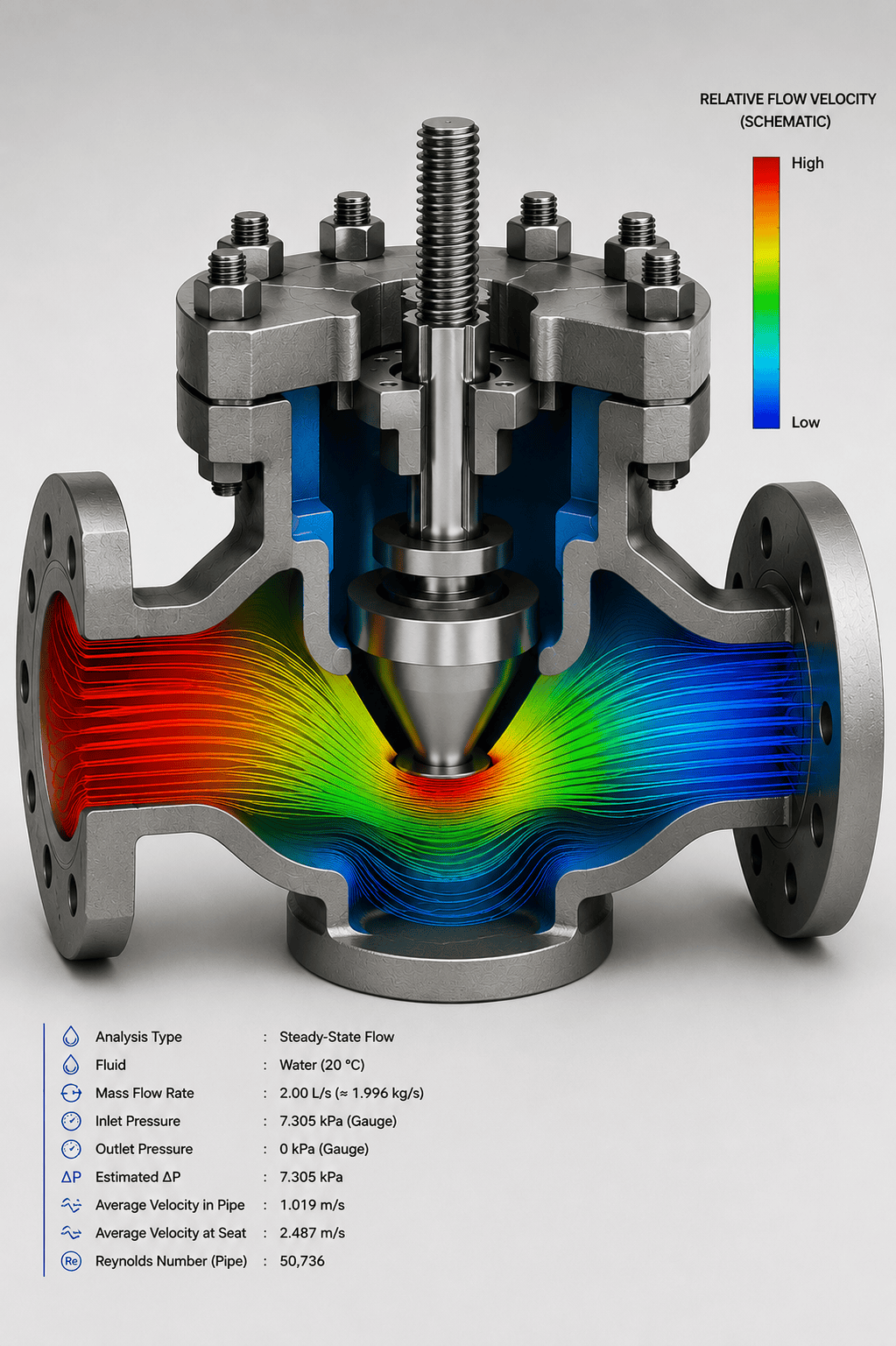
Internal Flow & Pressure Drop Analysis
Assessment of velocity, pressure distribution and flow behaviour within internal passages to identify restrictions, pressure losses and opportunities for improved flow performance.
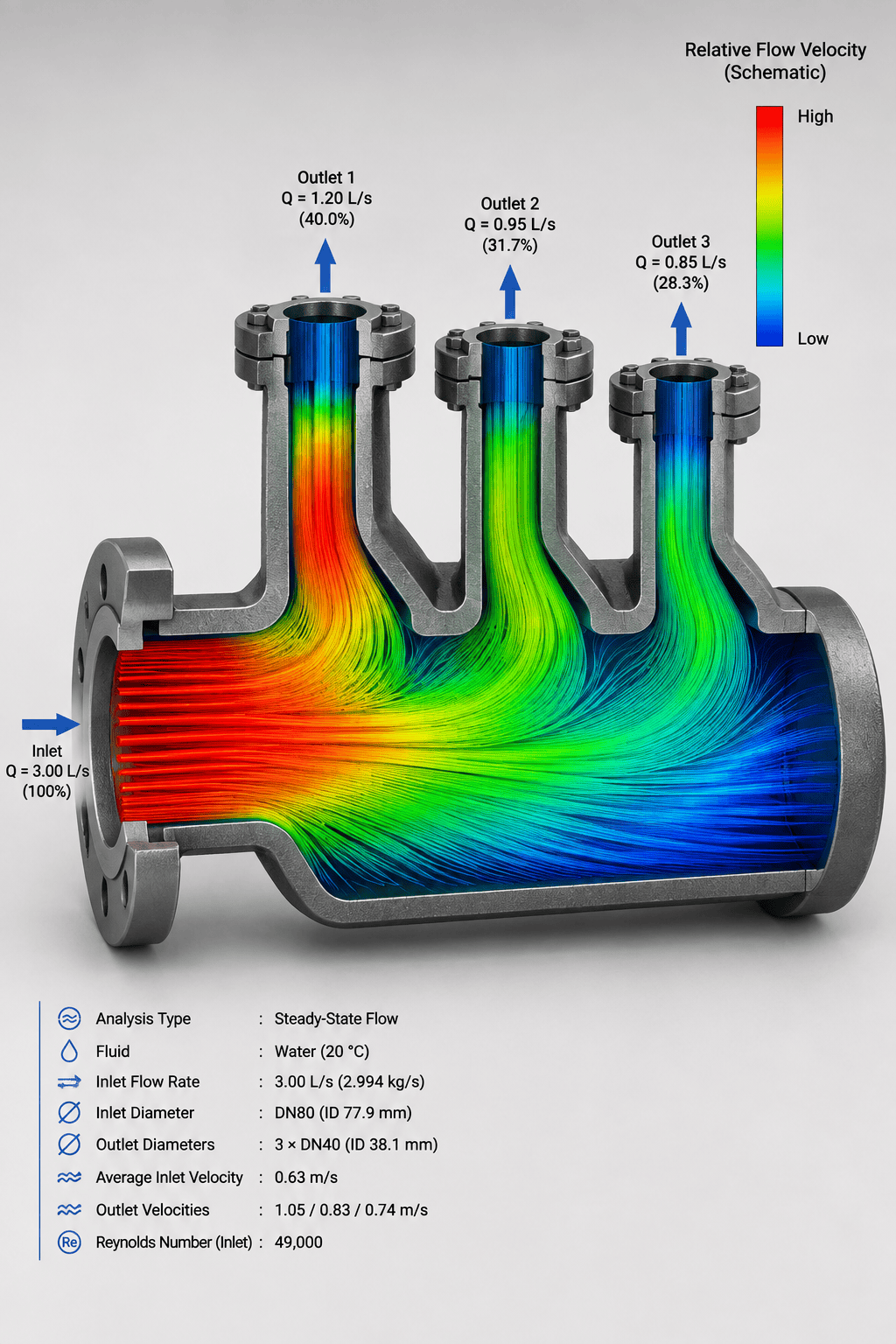
Flow Distribution & Manifold Analysis
Evaluation of flow through branches, passages and outlets to assess distribution, local losses and the influence of geometry on overall system performance.
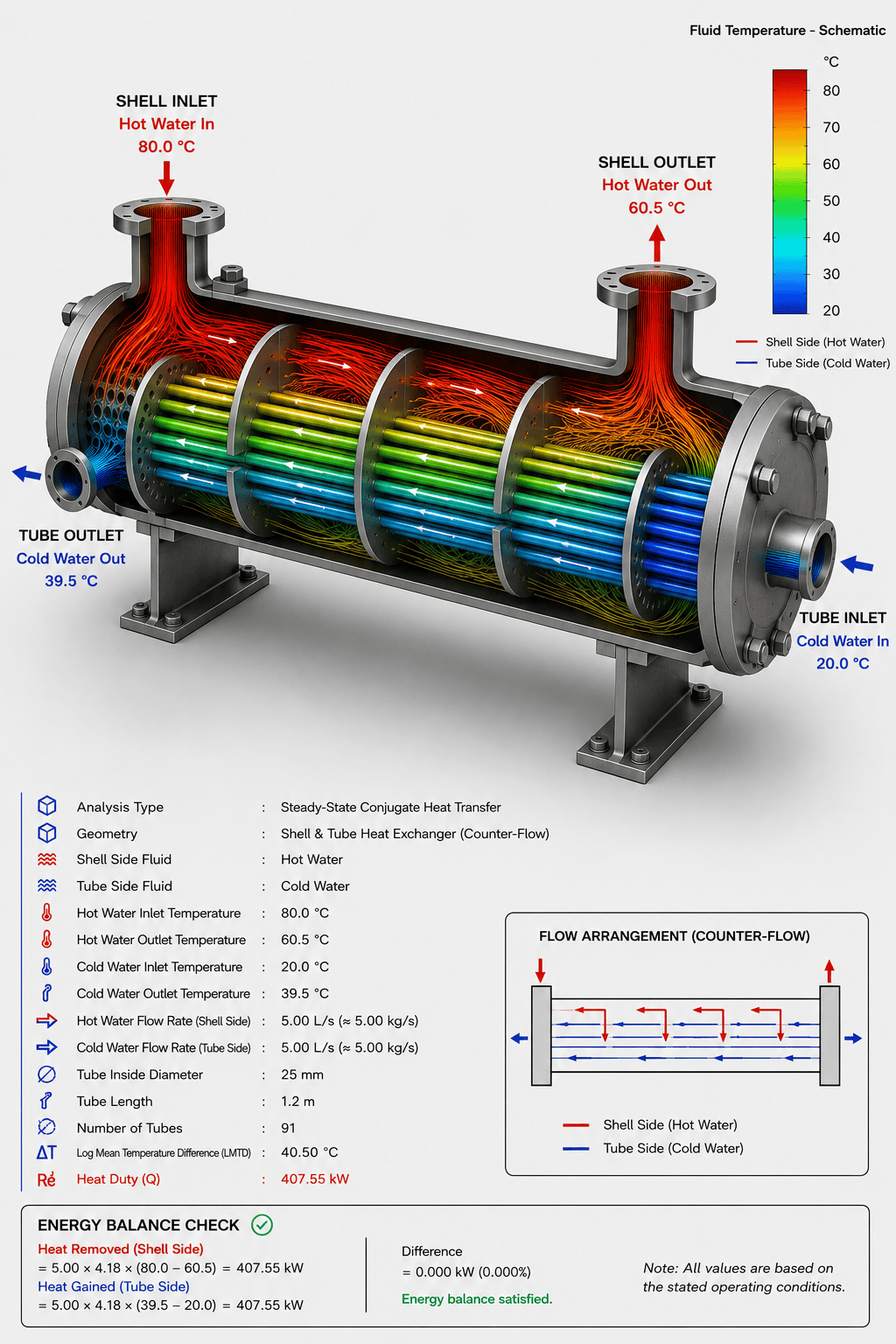
Thermal & Convective Heat Transfer Analysis
Assessment of fluid flow and temperature distribution to evaluate convective heat transfer, thermal gradients and overall thermal performance under defined operating conditions.
EXPLORE OUR CFD PROJECTS
View representative computational fluid dynamics studies covering internal and external flow, pressure distribution, thermal behaviour and other CFD applications used to support engineering design and performance evaluation.
Do you need CFD support?
Discuss Your CFD Needs With Us
Whether you need flow assessment, pressure-drop evaluation, thermal analysis or investigation of a specific fluid-flow challenge, we can discuss your requirements and determine the appropriate CFD approach for your project.