
Design Optimisation (DO)
DESIGN OPTIMISATION & ENGINEERING DEVELOPMENT
Dynede Dynamics applies design optimisation to improve the performance, efficiency and practicality of mechanical components and systems. Geometry, material use and relevant design parameters are evaluated against defined engineering objectives and constraints to identify opportunities for measurable design improvement.
Optimisation is approached as part of the engineering design process rather than as a purely mathematical exercise. Performance requirements, structural behaviour, manufacturability, operating conditions and design constraints are considered together so that proposed improvements remain technically meaningful and practical to implement.
FROM DESIGN REQUIREMENTS TO OPTIMISED SOLUTION
A useful optimisation study begins by defining the engineering objectives, design variables and constraints that govern the problem. Parameters such as geometry, mass, stiffness, stress, displacement or other relevant performance measures can then be evaluated systematically to understand their influence on design performance and identify promising solutions.
DESIGN EXPLORATION & TRADE-OFFS
Candidate designs are reviewed in engineering context to understand how changes in key variables affect the defined objectives and constraints. Performance trends, sensitivities and competing requirements are considered together, allowing useful trade-offs to be identified and promising design directions to be selected for further development.
DESIGN VERIFICATION & DEVELOPMENT
Optimisation results are assessed in engineering context rather than selecting a solution solely from a numerical objective value. Candidate designs, sensitivities and performance trade-offs are reviewed against the original requirements so that improvements in one area do not introduce unacceptable consequences elsewhere.
Where design changes are introduced, promising solutions can be refined and reassessed to confirm that the intended improvements are retained. This iterative process allows optimisation to support design development while maintaining a clear relationship between engineering requirements, design decisions, manufacturability and predicted performance.
ENGINEERING JUDGEMENT & MODEL VALIDITY
The value of an optimisation study depends on the suitability of the objectives, constraints, design variables and engineering assumptions used to define the problem. Candidate solutions are therefore reviewed alongside their underlying analysis and practical requirements, with attention given to whether the predicted improvements are physically reasonable, manufacturable and appropriate for the intended application.
Where optimisation is supported by numerical analysis, the fidelity of the underlying models is considered in relation to the decisions being made. Results are interpreted with appropriate engineering judgement so that numerical improvements translate into credible design changes rather than optimisation of the model alone.
DESIGN OPTIMISATION CAPABILITIES
Design Space & Parameter Definition
Identification of relevant design variables, engineering objectives and constraints to establish a practical basis for optimisation.
Geometry & Parameter Optimisation
Systematic evaluation of geometric and dimensional parameters to improve performance while satisfying defined engineering requirements.
Weight & Material Reduction
Assessment of opportunities to reduce component mass and material usage while maintaining required strength, stiffness and functional performance.
Performance Trade-Off Assessment
Evaluation of competing objectives and design alternatives to understand trade-offs between factors such as mass, stiffness, stress, performance and manufacturability.
Design Exploration & Sensitivity
Investigation of how changes in key design variables influence engineering performance, helping identify influential parameters and promising design directions.
Optimised Design Verification
Reassessment of selected design solutions against the original requirements and constraints to confirm that predicted improvements remain technically acceptable and practical.
DESIGN OPTIMISATION CASE STUDIES
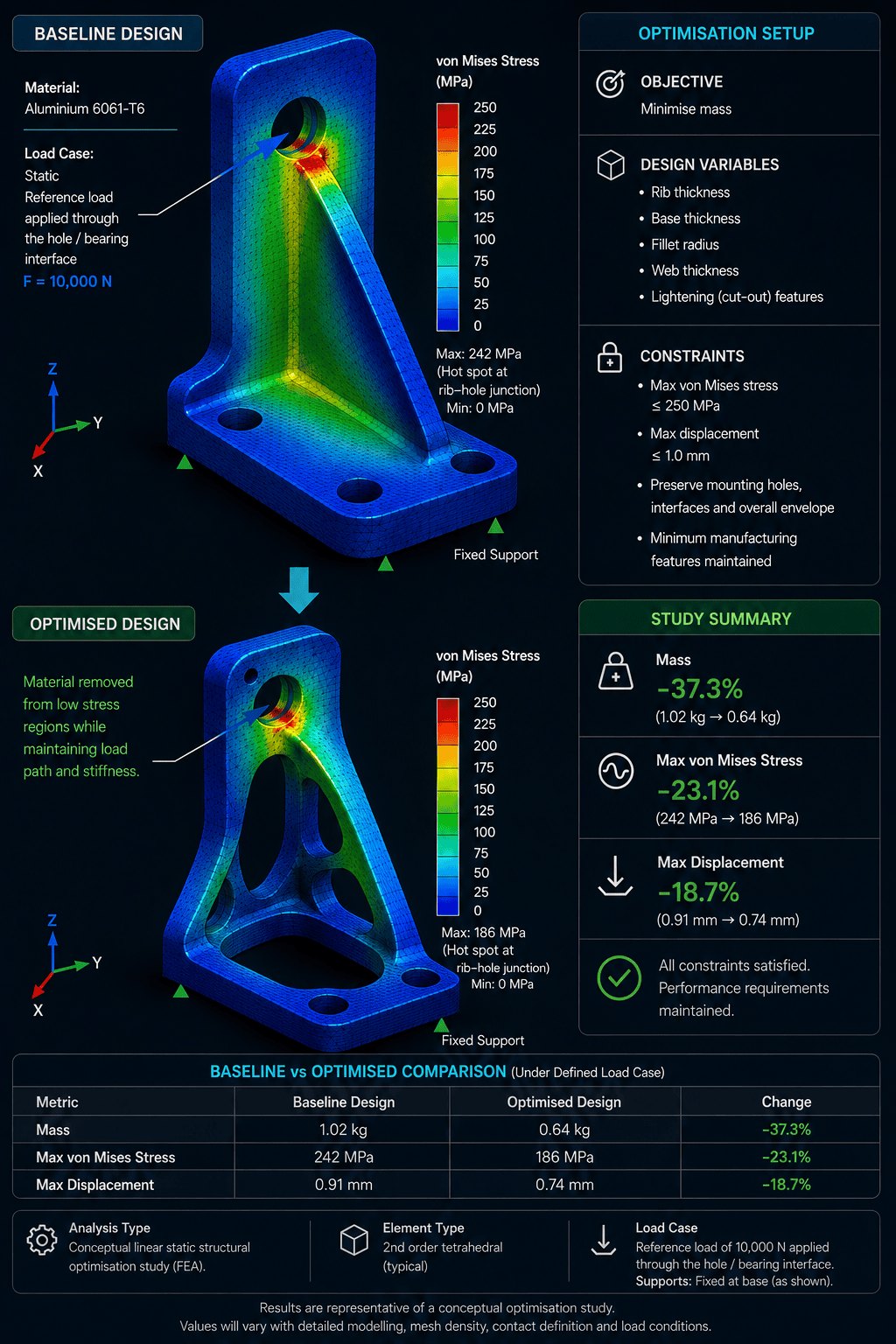
Structural Weight Optimisation
Evaluation of geometry and material distribution to reduce component mass while maintaining defined strength, stiffness and functional requirements.
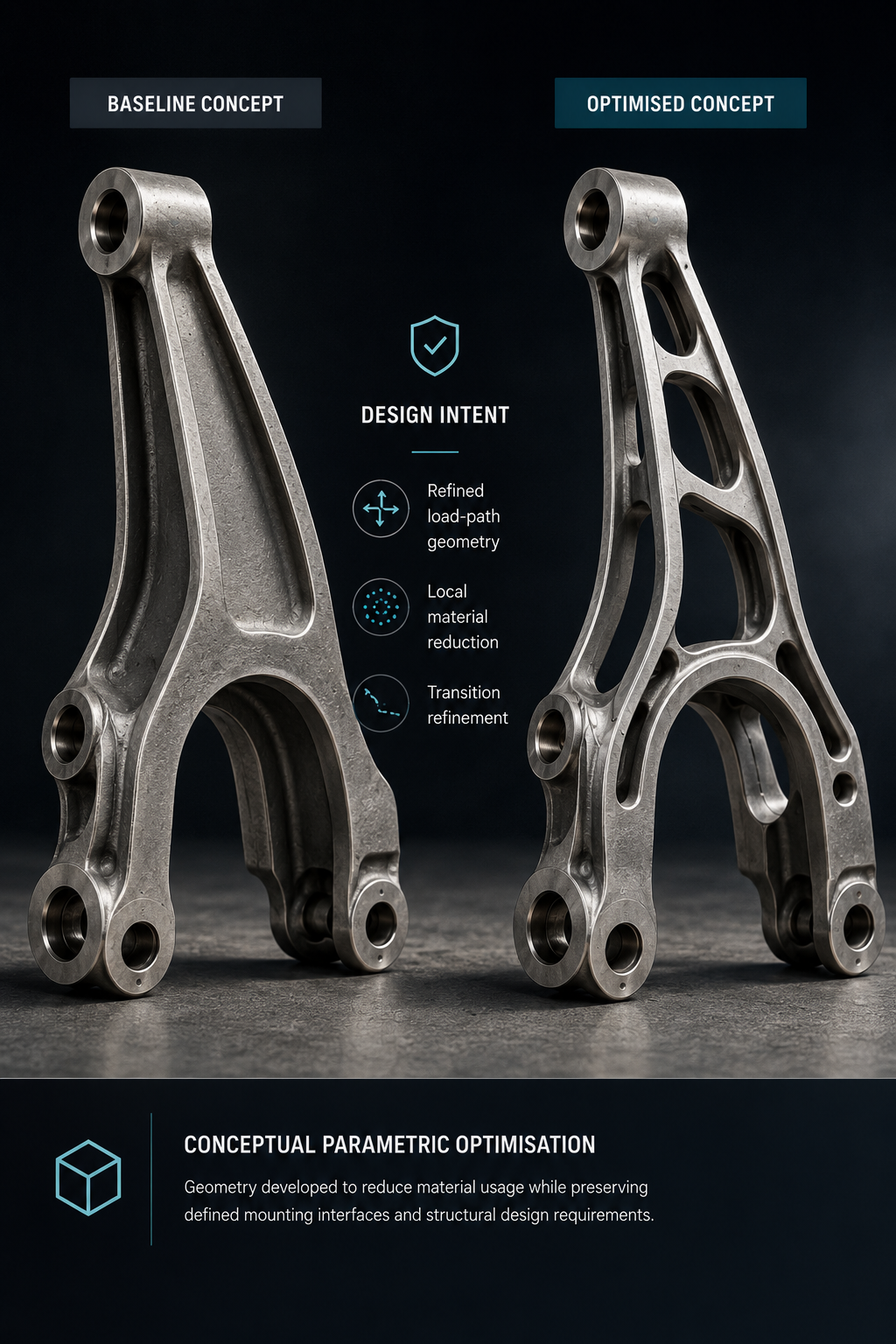
Geometry & Performance Optimisation
Systematic assessment of design parameters and geometric features to improve mechanical performance while satisfying defined engineering and practical constraints.
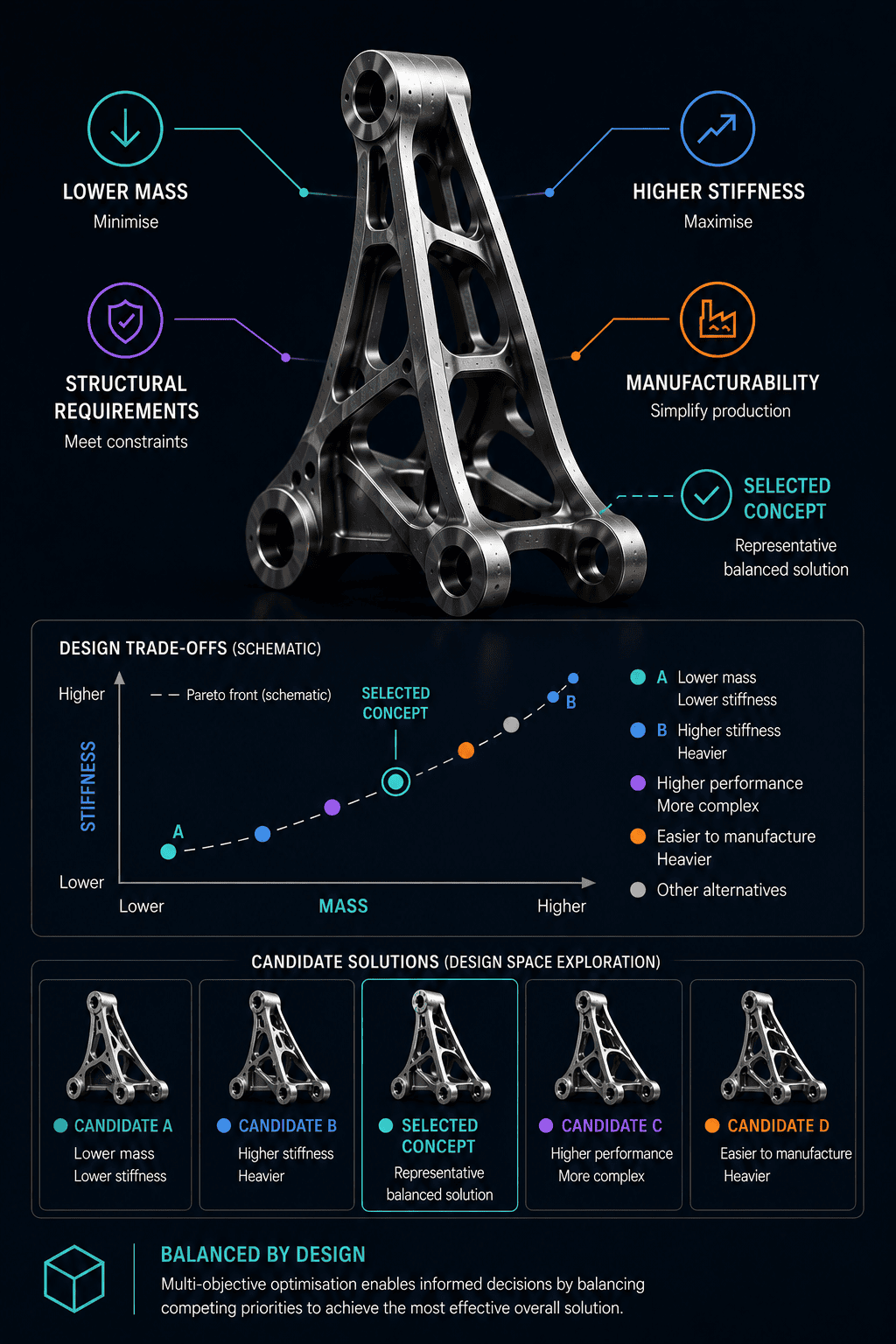
Multi-Objective Design Optimisation
Evaluation of competing design objectives and candidate solutions to identify balanced improvements in factors such as mass, stiffness, structural performance and manufacturability.
EXPLORE OUR DESIGN OPTIMISATION PROJECTS
View representative design optimisation studies covering weight reduction, geometry refinement, performance trade-offs and multi-objective design development used to improve engineering performance and support informed design decisions.
Do you need design optimisation support?
Discuss Your Design Optimisation Needs With Us
Whether you need weight reduction, geometry refinement, performance improvement or evaluation of competing design requirements, we can discuss your objectives and determine an appropriate optimisation approach for your project.